Cursor Composer 2.5: The First Real Leap in AI Coding Agents?
Cursor officially launched Composer 2.5 with major improvements in long-task reliability, instruction-following, and coding workflows. Here’s what actually changed.

Cursor Wants to Move Beyond “Copilot" Into Full AI Agent Territory.
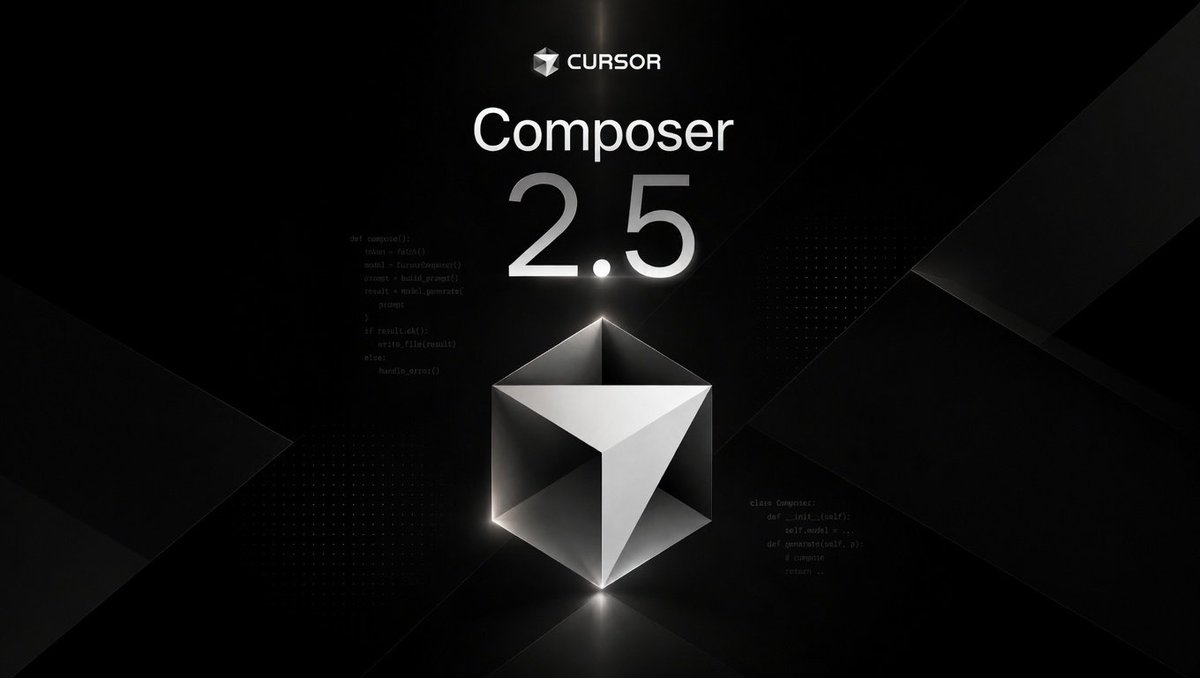
On May 17, 2026, Cursor officially released Composer 2.5, positioning it as a major upgrade over Composer 2.
But this time, the company isn’t only talking about benchmark gains.
Cursor says the real focus was improving:
long-session reliability;
instruction-following;
workflow stability;
and overall model behavior during real development tasks.
In other words:
less flashy demo energy,
more production-grade usefulness.
According to early user feedback, Composer 2.5 genuinely feels more mature, more disciplined, and more coherent during complex coding sessions.
What Actually Changed in Composer 2.5
Cursor says Composer 2.5 was trained with:
25× more synthetic tasks than Composer 2;
continued pretraining;
and targeted reinforcement learning using textual feedback.
The goal is no longer just raw code generation.
The real improvement appears to be in:
multi-step reasoning;
long-context consistency;
smarter tool usage;
and reducing the chaotic behavior common in AI coding agents.
That distinction matters.
Many coding assistants today can generate impressive snippets, but struggle to stay coherent across extended workflows.
Composer 2.5 seems specifically designed to solve that problem.
Built for Long-Horizon Development Workflows
One of the biggest weaknesses of current AI coding tools is context degradation over time.
At first, the model looks brilliant.
Then gradually:
instructions get forgotten;
architectural consistency breaks;
unnecessary rewrites appear;
and debugging becomes messy.
Cursor claims Composer 2.5 significantly improves long-horizon task handling.
That includes:
large codebases;
multi-file refactors;
iterative debugging;
complex tooling chains;
and sustained collaborative workflows.
User feedback largely supports this claim.
Many developers report:
cleaner responses;
better instruction retention;
improved consistency;
and a noticeably more stable coding experience.
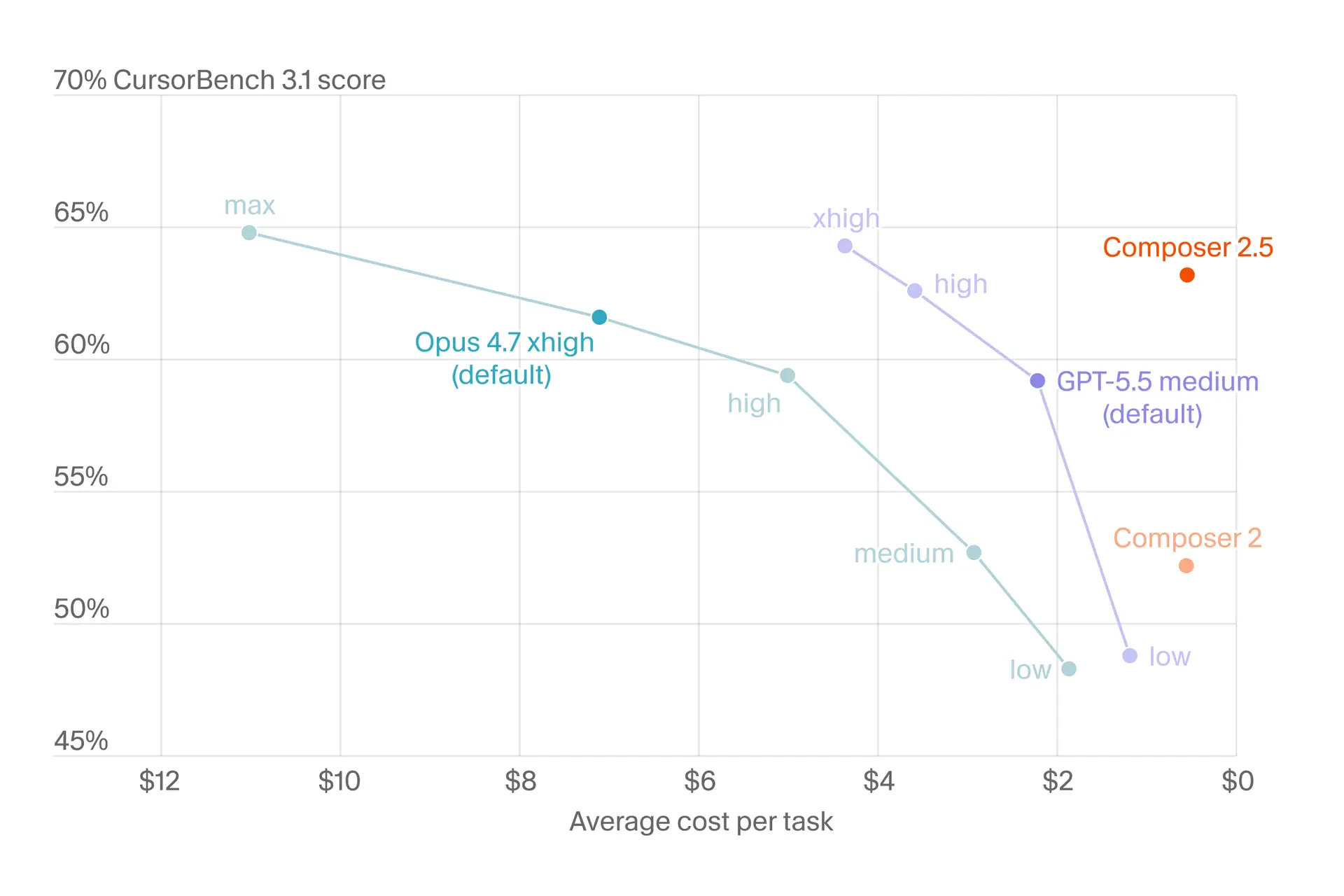
Powered by Kimi K2.5 But Heavily Enhanced
Technically, Cursor says Composer 2.5 is based on the open-source Kimi K2.5 checkpoint, but heavily modified internally.
The company specifically mentions:
targeted reinforcement learning;
infrastructure optimization;
sharded Muon;
dual mesh HSDP;
and large-scale training improvements.
Cursor also revealed ongoing work with SpaceXAI on a significantly larger model trained with 10× more compute on Colossus 2.
The important takeaway is that the AI coding race is evolving.
Competitive advantage no longer comes only from the base model itself.
It increasingly comes from:
agent behavior;
workflow optimization;
context stability;
and real-world developer usability.
Performance and Pricing: Cursor Stays Aggressive
Another reason Composer 2.5 is getting attention is its pricing model.
Cursor currently lists:
$0.50/M input tokens
$2.50/M output tokens in standard mode
and:
$3/M input
$15/M output in fast mode.
For heavy daily users, that makes Cursor extremely competitive compared to several premium AI coding alternatives.
More importantly:
Composer 2.5 is now the default model inside Cursor.
That signals confidence from the company itself, this isn’t positioned as an experimental release, but as the new baseline experience.
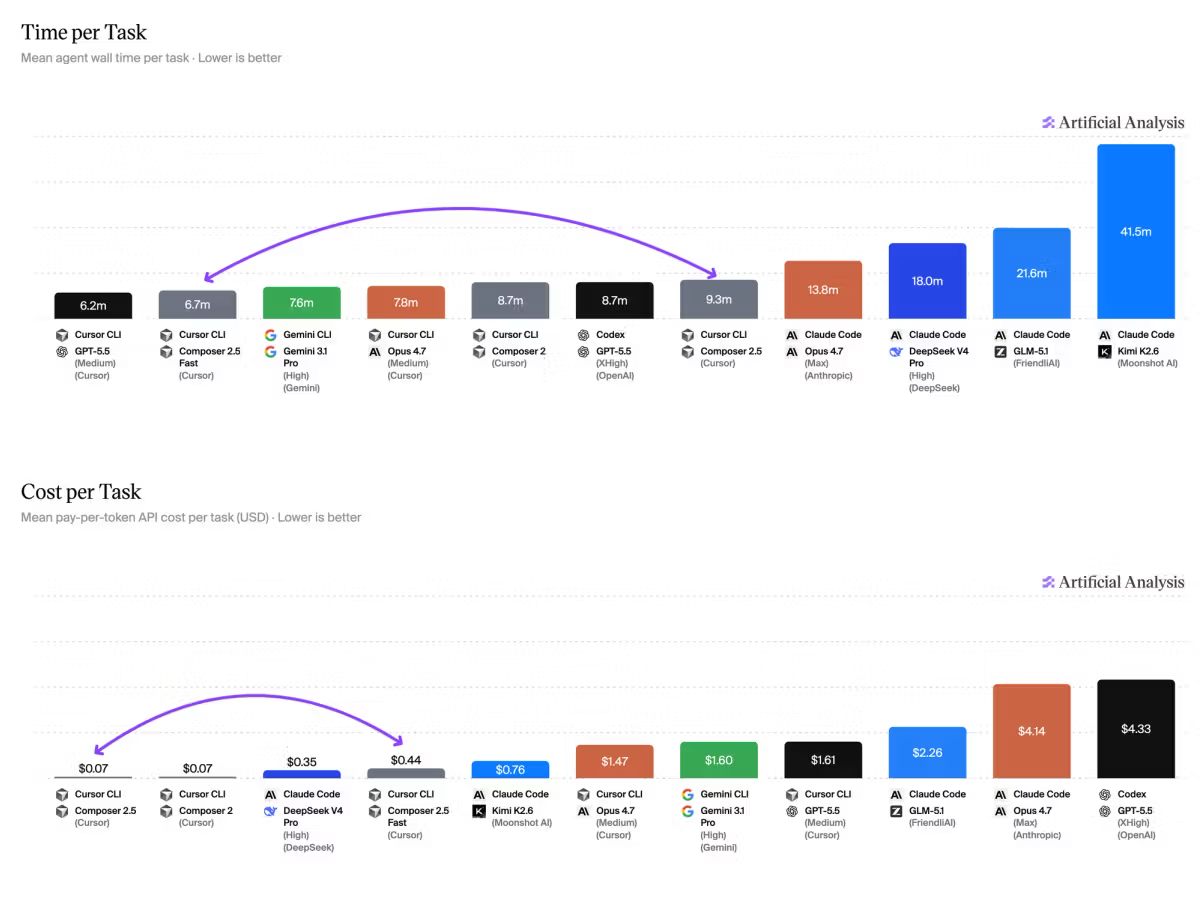
The Weaknesses: Cursor Still Has Friction Points
Despite the strong reception, users are still reporting some issues.
The criticism mostly targets the surrounding application ecosystem rather than the model itself.
Some developers mention:
strange UI behavior;
occasional over-aggressive code rewrites;
imperfect handling of KISS/DRY principles;
and high resource consumption on certain machines.
In short:
the model appears to be evolving faster than the application around it.
And that’s likely Cursor’s next major challenge.
The Most Important Upgrade Isn’t Intelligence, It’s Discipline
The most interesting thing about Composer 2.5 may not even be raw intelligence.
It’s behavioral discipline.
For years, AI coding assistants have optimized for short bursts of impressive output.
But real software development is messy:
iterative;
contextual;
multi-step;
and often chaotic.
Composer 2.5 feels like one of the first serious attempts to make AI agents reliable over extended real-world workflows rather than isolated prompts.
And that could mark a major shift in the evolution of AI coding tools:
less benchmark theater,
more practical engineering value.
Final Thoughts
With Composer 2.5, Cursor appears to be entering a new maturity phase.
The model feels:
more stable;
more coherent;
better at sustained development work;
and more production-oriented than previous versions.
The Cursor ecosystem still has rough edges, but Composer 2.5 increasingly looks like a genuine generational improvement rather than another incremental update.
And in the AI coding wars, that distinction matters a lot.
Did you enjoy this article?

Written by
Chris
Tech builder · Agentic AI & offensive security
A tech-obsessed builder, I'm building Sentinelle — an autonomous offensive-security AI agent. I write here about agentic AI, AI-assisted pentesting, and what I learn shipping offensive tooling.