Project Glasswing: Anthropic’s AI Found Over 10,000 Critical Vulnerabilities in One Month
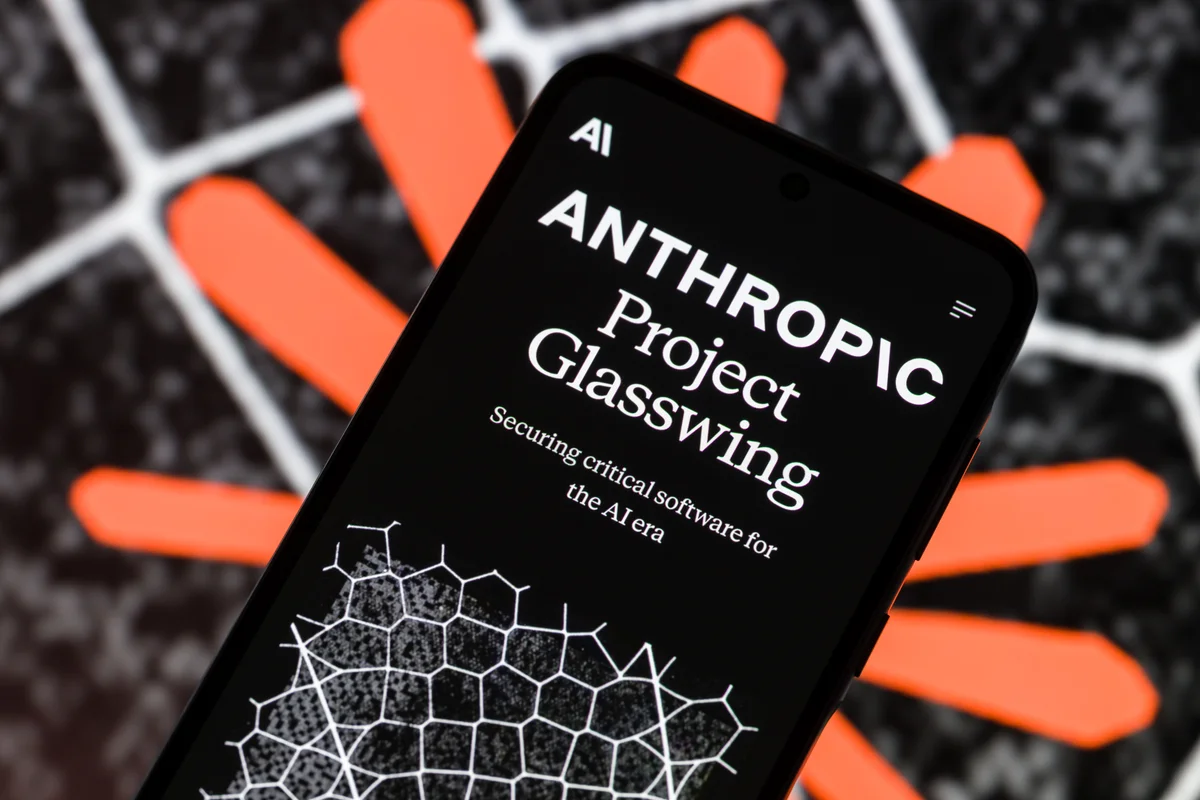
Project Glasswing by Anthropic reportedly uncovered over 10,000 critical vulnerabilities using Claude Mythos AI in just one month.

Project Glasswing: Anthropic’s AI Found Over 10,000 Critical Vulnerabilities in One Month
Artificial intelligence may be entering its most important cybersecurity era yet.
One month after launching Project Glasswing, Anthropic announced that the initiative has already helped uncover more than 10,000 high- or critical-severity vulnerabilities across essential software systems.
The statement was brief, but its implications are massive:
“Last month we launched Project Glasswing, our collaborative AI cybersecurity initiative. Since then, we and our partners have found more than ten thousand high- or critical-severity vulnerabilities in essential software.”
If accurate, this means an AI-driven cybersecurity initiative identified thousands of serious software flaws in just a few weeks — vulnerabilities that traditional audits, scanners, and security teams had not fully uncovered.
And it could mark the beginning of a completely new phase in cybersecurity.
What Is Project Glasswing?
Project Glasswing is Anthropic’s collaborative cybersecurity initiative designed to use advanced AI models for defensive security purposes.
The project reportedly involves partnerships with major technology and security organizations, including:
AWS
Microsoft
Google
NVIDIA
Apple
Palo Alto Networks
CrowdStrike
Linux Foundation
The core mission is simple:
Use powerful AI systems to identify and remediate critical vulnerabilities before malicious actors can exploit them.
Instead of relying entirely on manual audits or traditional vulnerability scanners, Glasswing leverages AI capable of:
analyzing massive codebases,
understanding software architecture,
detecting risky logic patterns,
identifying exploit chains,
and assisting with remediation.
Claude Mythos: The AI Behind the Initiative
At the center of Project Glasswing is Claude Mythos, an advanced AI model reportedly optimized for cybersecurity research and vulnerability analysis.
According to Anthropic, Mythos significantly outperforms previous Claude models on internal cybersecurity evaluations involving:
vulnerability discovery,
exploit reasoning,
complex code analysis,
and attack-chain identification.
Unlike traditional scanners that mainly rely on signatures or predefined rules, Mythos appears capable of reasoning through:
code interactions,
privilege boundaries,
memory handling,
control flow,
misconfigurations,
and unexpected system behavior.
That reasoning capability is what makes the model especially powerful.
Rather than merely matching known patterns, the AI can reportedly identify entirely new vulnerability paths and hidden weaknesses buried inside complex software ecosystems.
More Than 10,000 Critical Vulnerabilities
The number itself is staggering.
In just one month, Anthropic claims Project Glasswing helped identify:
over 10,000 high- or critical-severity vulnerabilities,
across widely used and essential software,
including potentially critical infrastructure components.
These vulnerabilities may affect:
operating systems,
cloud infrastructure,
open-source dependencies,
networking software,
browsers,
and enterprise platforms.
What makes this especially concerning is that many of these issues likely existed despite:
professional security audits,
automated scanners,
bug bounty programs,
and dedicated security teams.
It highlights a difficult reality in modern cybersecurity:
Today’s software ecosystems are simply too large and complex for humans alone to secure efficiently.
Why This Changes Cybersecurity
For decades, vulnerability research depended heavily on:
human expertise,
manual analysis,
reverse engineering,
and time-intensive auditing.
AI models like Claude Mythos could fundamentally change that equation.
An advanced AI system capable of understanding software at scale may dramatically accelerate:
vulnerability discovery,
secure code reviews,
exploit detection,
patch generation,
and defensive analysis.
In practical terms, AI could become a permanent layer inside the software development lifecycle itself.
Future systems may continuously:
analyze every commit,
simulate attack paths,
identify dangerous logic,
and propose fixes before deployment.
That would represent one of the largest shifts in cybersecurity history.
The Dangerous Paradox
However, there is an obvious problem.
An AI capable of finding critical vulnerabilities at scale could also become an extremely dangerous offensive tool.
The same capabilities used for defense could theoretically help:
discover zero-days faster,
automate exploit research,
identify attack surfaces,
and accelerate offensive cyber operations.
This is the central paradox of AI-driven cybersecurity.
A system powerful enough to secure global infrastructure may also be powerful enough to threaten it if misused.
That is why Anthropic reportedly chose to keep Claude Mythos restricted to trusted partners rather than releasing it publicly.
The company emphasizes:
controlled access,
governance,
security safeguards,
and responsible deployment.
In many ways, Project Glasswing reflects a broader industry realization:
Frontier AI models are becoming strategically sensitive technologies.
A New Era of AI-Powered Security
Project Glasswing may ultimately represent the beginning of a new cybersecurity era.
For years, AI in security mostly focused on:
anomaly detection,
malware classification,
threat intelligence,
and automation.
Now, AI is beginning to actively reason about software vulnerabilities themselves.
That changes everything.
If models like Claude Mythos continue improving, future cybersecurity workflows may rely heavily on AI systems capable of:
continuously auditing software,
discovering hidden exploit chains,
generating defensive patches,
and strengthening infrastructure before attacks happen.
But at the same time, the global cybersecurity landscape could become an AI arms race between attackers and defenders.
And that raises the biggest question of all:
Who will control the AI systems capable of discovering tomorrow’s critical vulnerabilities first?
Did you enjoy this article?

Written by
Chris
Tech builder · Agentic AI & offensive security
A tech-obsessed builder, I'm building Sentinelle — an autonomous offensive-security AI agent. I write here about agentic AI, AI-assisted pentesting, and what I learn shipping offensive tooling.