AI Pentesting: How AI Is Transforming Offensive Security
Discover how AI pentesting is reshaping offensive cybersecurity through autonomous agents, vulnerability detection, and attack automation.

Artificial intelligence is rapidly changing the cybersecurity industry. After transforming software development, automation, and data analysis, AI is now reshaping penetration testing and offensive security.
The rise of AI pentesting is becoming one of the biggest shifts in cybersecurity. Companies, researchers, and security teams are exploring how AI agents can automate vulnerability discovery, analyze code, simulate attacks, and accelerate security testing faster than ever before.
But one important question remains:
Will AI replace penetration testers?
The reality is more nuanced.
What Is AI Pentesting?
AI pentesting refers to the use of artificial intelligence to assist or automate offensive security tasks.
This includes:
vulnerability discovery;
reconnaissance;
exploit generation;
code analysis;
payload creation;
fuzzing automation;
access control testing;
security report generation.
Unlike traditional scanners, AI systems can understand context, identify patterns, and adapt their behavior dynamically during testing.
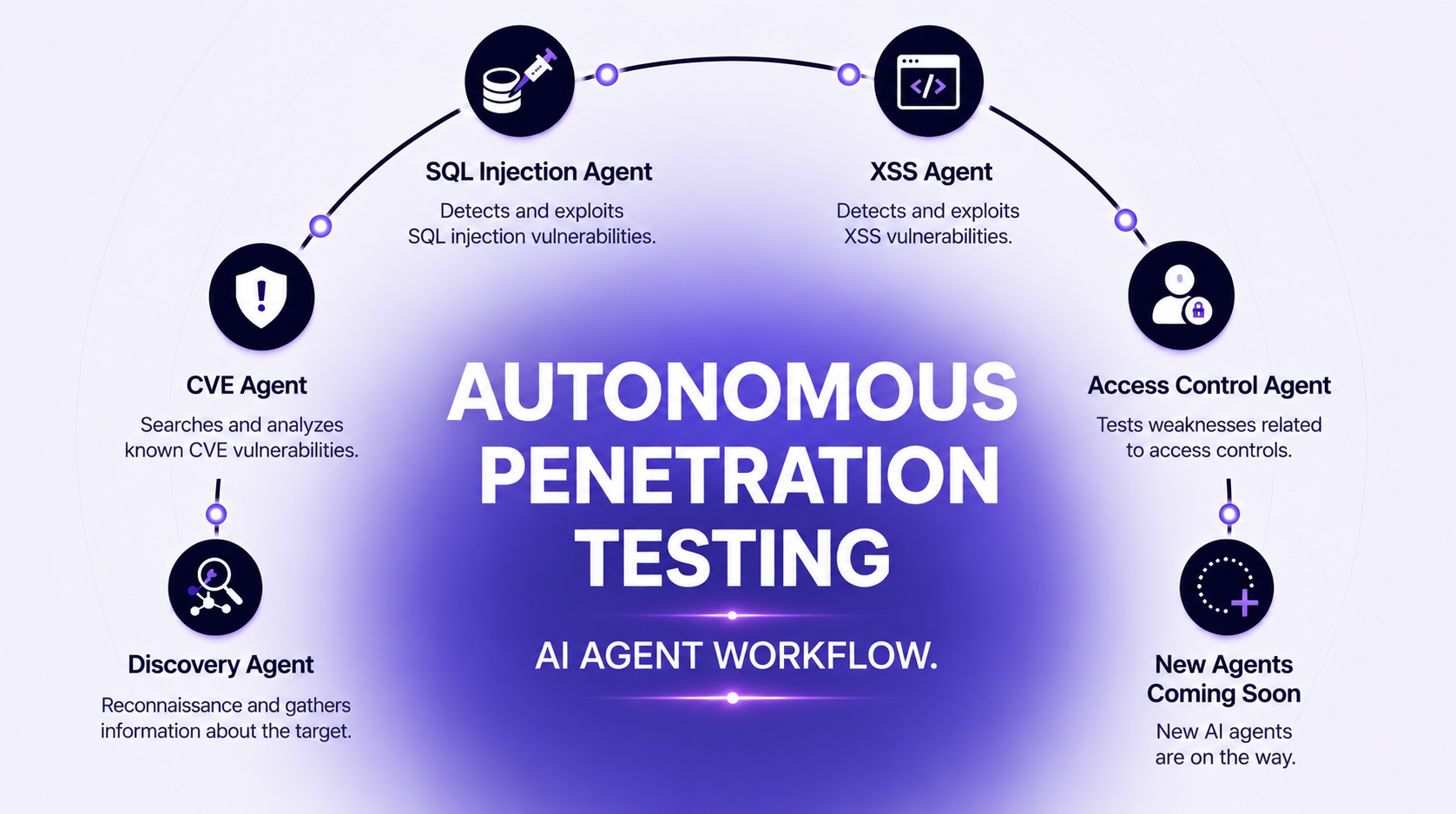
An advanced AI agent can:
scan a target;
identify vulnerabilities;
generate exploit attempts;
validate findings;
produce technical reports automatically.
This is why autonomous cybersecurity agents are becoming increasingly important in modern offensive security workflows.
Why AI Pentesting Is Growing So Fast
1. Modern infrastructures move too quickly
Applications are deployed constantly. Cloud environments change every hour. Human security teams struggle to keep up with the speed of modern development pipelines.
AI helps automate repetitive security testing and reduces detection time significantly.
2. AI models understand code better than ever
Modern AI systems can analyze:
Python;
JavaScript;
Go;
Rust;
C/C++;
Solidity;
cloud configurations;
APIs and web applications.
They can also detect logical vulnerabilities that traditional scanners may completely miss.
3. Autonomous AI agents are emerging
The cybersecurity industry is moving beyond simple chatbots.
New AI agents can:
plan actions;
use external tools;
remember previous findings;
adapt attack strategies;
chain multiple security tasks together.
This evolution is redefining penetration testing itself.
The Current Limitations of AI Pentesting
Despite impressive progress, AI pentesting still has major limitations.
Some current challenges include:
hallucinations;
false positives;
unstable exploit execution;
lack of business context;
incomplete environment understanding.
Many vulnerabilities still require human intuition and creativity, especially in:
complex attack chains;
social engineering;
proprietary systems;
advanced red teaming operations.
The future will most likely involve collaboration between human experts and AI agents rather than full replacement.
The Future of Offensive AI
In the coming years, autonomous AI security agents may become capable of:
continuous security auditing;
automatic vulnerability remediation;
real-time infrastructure monitoring;
autonomous attack simulations;
advanced exploit validation.
Cybersecurity platforms are evolving toward intelligent autonomous systems capable of acting similarly to human analysts.
Projects like Sentinel are part of this evolution, focusing on offensive AI agents designed to automate vulnerability research and accelerate penetration testing workflows.
Is AI Pentesting Dangerous?
Like every powerful technology, AI can be used for both defense and offense.
Defenders use AI to:
detect threats faster;
automate remediation;
improve security monitoring.
Attackers can also use AI to:
automate reconnaissance;
generate phishing campaigns;
discover vulnerabilities at scale.
Cybersecurity is entering a new era:
AI-powered attackers versus AI-powered defenders.
Conclusion
AI pentesting is no longer a futuristic concept. It is already transforming offensive cybersecurity.
Autonomous AI agents are becoming capable of accelerating vulnerability discovery, automating security tasks, and reshaping how penetration testing is performed.
Human expertise will remain essential, but the future of offensive security will undoubtedly be deeply connected to artificial intelligence.
Did you enjoy this article?

Written by
Chris
Tech builder · Agentic AI & offensive security
A tech-obsessed builder, I'm building Sentinelle — an autonomous offensive-security AI agent. I write here about agentic AI, AI-assisted pentesting, and what I learn shipping offensive tooling.